Saturday, July 20, 2019

How I Gain 1,260 Instagram Followers Per Week

instagram

Do you want to be instafamous?

Well, who doesn’t?

Over the last few months, I’ve been running numerous Instagram experiments and I’ve finally figured out how to grow my Instagram following.

My Neil Patel account has been growing by 1,260 followers per week.
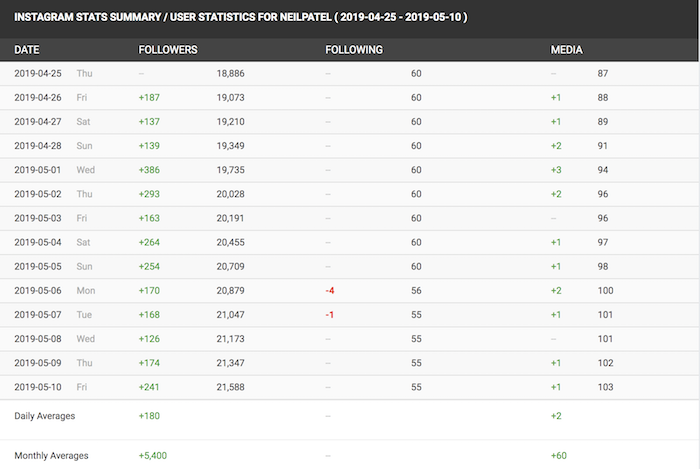
follower growth

And I know what you are thinking… Neil, you are already well known, this can’t be replicated by anyone else.

Right?

Well, not only did we test this strategy out on my profile, but we also did it on 2 other profiles.

It works no matter what industry you are in. Heck, it works even better if you aren’t in B2B like me.

Just look at Dhavalilama. His likes per image have been growing by just using the heart trick, which I will explain in a bit, and he isn’t using my whole strategy. :/

So, how do you gain more Instagram followers each week without spending money?

Tip #1: Instagram wants long videos

You’ve heard everyone say that you need to upload videos. Social networks like Instagram aren’t just competing with other social networks, they are competing with traditional media and even companies like Netflix for your attention.

If you upload videos, you’ll find that you’ll get more engagement than if you just upload images.

But the key isn’t to just upload any video… it ideally needs to be engaging and long.

By long I am not talking about a 60-second video, I’m talking minutes. You’ll have to leverage IGTV for this, but that’s what they want as not enough people are using that feature.

Hence, if you use IGTV, they’ll push your video more.

That way when someone is watching a 5-minute video you just posted, they’ll be able to watch the first 60 seconds on their feed and then they’ll be pushed over to IGTV.

All you have to do is upload the video to IGTV and select the “post a preview” option.
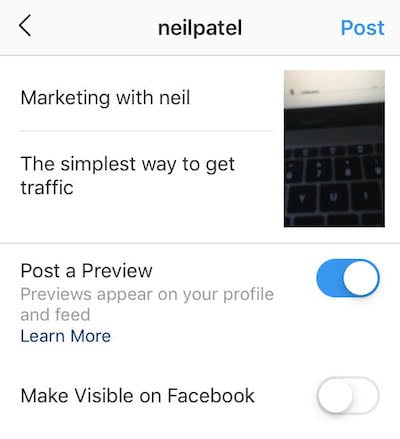
preview

What this does is, it uploads the video to IGTV and then also promotes the video through your feed.

Just look at this video that I only posted on IGTV.
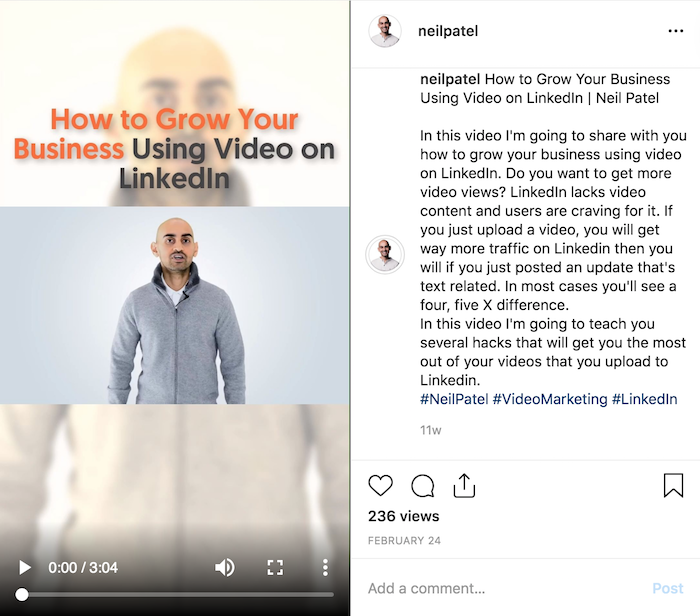
igtv

It had 236 views before writing this blog post.

When I posted that video, I had 9,078 followers, which means I had an engagement rate of 2.59%.

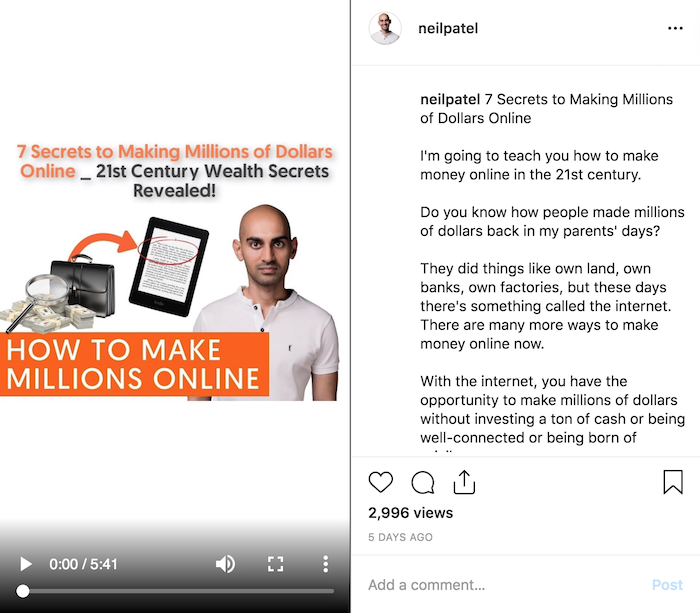
Now if you look at this video that I posted…
igtv

It had 2,971 views before writing this blog post.

When I posted that video I had 21,047 followers, which means I had an engagement rate of 14.11%.

What’s crazy is, that one simple change increased my video engagement by 444%.

Tip #2: Ask and you will receive

Instagram’s algorithm is simple… the more views and likes your videos and images receive, the more people will see them, which increases engagement and your follower count over time.

There’s not too much more to the algorithm.

Of course, they are looking at things like what percentage of your followers actually engage… but still, the algorithm from a conceptual standpoint is simple.

So, have you thought about asking for people to “like” your image?

Now with Instagram, people are using it via their cell phone so it’s more of a “double tap” than a like… but you get the point.

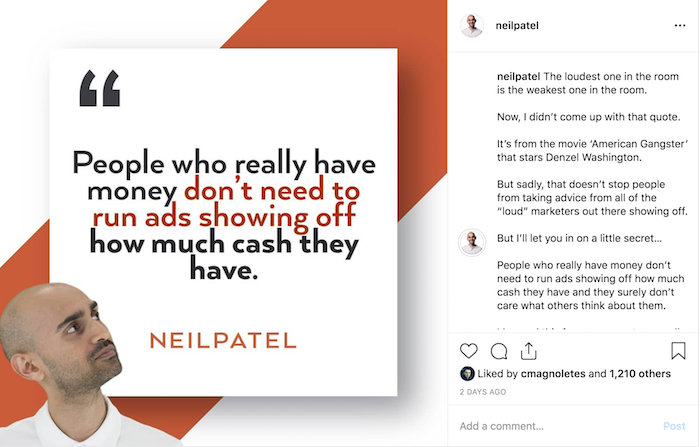
On average, when I post an image on Instagram I can generate 945.6 likes.

Here’s an example of one of those images:
neil patel quote

And as you can see from the engagement, that one did better than most of my images as it has over 1,000 likes.

Plus, the messaging resonates with a lot of people.

But here is one that is simple…

double tap

I just asked people to “double tap” if they need to improve their video skills.

It didn’t take much creativity to come up with that image and it received 1,441 likes. In other words, it produced 51.96% more engagement.

You should give it a try… I tend to use this tactic a few times a month and it works really well.

Just be careful though, if you use it every day or every week, people will get sick of it and it will stop working. Hence, I only use it a few times a month max.

Tip #3: Go live

Did I already mention that Instagram is competing with television networks and Netflix?

Because of that, what kind of content do you think they want more of?

Well, yes they want more video content, but we already talked about that.

They want more live content.

Think… reality TV.

Now the live content you produce doesn’t have to be like Keeping up with the Kardashians… they just want live content that people are looking forward to viewing.

You know how you will tune into shows like American Idol or the latest soccer or football match because it’s live and you want to see what’s happening in real time? That’s the effect Instagram is hoping for with live content.

Now, when you go live, Instagram is promoting it heavily so you’ll get more viewers. It doesn’t matter what you talk about… they just want to see more people go live.

Every time I go live, I am able to get at least 1,000 views. Just look at the live I just did…

live

In the first 6 hours, it’s already received 718 views and I did this live session on a Sunday during non-peak hours. Within the first 24 hours, it will easily surpass 1000 views.

In other words, go live! It’s a simple and quick way to grow your following count. Ideally, you should be going live on a weekly basis.

Heck, you can’t go live too much… feel free to go live daily.

Tip #4: Respond to comments

This one is simple, but no one really does it.

Social networks are supposed to be social. That means you should participate.

And no, I am not talking about just liking other images and viewing videos. I’m talking about engaging with people and talking to them.

So, when you like something that someone else posts, leave a comment.

And when someone leaves a comment on one of your posts… what do you think you should do?

You should respond to them with a comment.

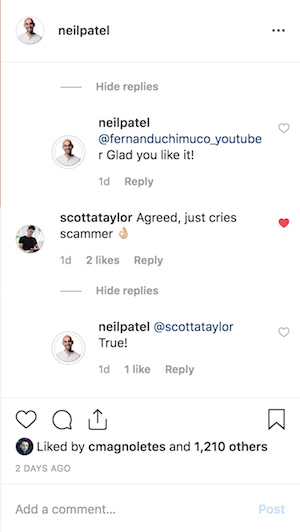
Now, let’s look at some of my posts for a minute. You’ll see decent engagement, but more so, you’ll see me being very active.
comments

Just look at all of my responses.

By engaging with people, you’re more likely to build a relationship with these individuals, which makes it more likely that they will back and continually engage with your posts.

Tip #5: The heart trick

Alright, are you ready for the heart trick? You know, the one Dhavalilama has been using to boost his like count by 300%.

The concept is simple, but it will take a bit of finesse to implement.

A part of Instagram’s algorithm is how much engagement you get from other Instagram users within the first hour of you posting anything.

Now, I’ve done a lot of tests with this… if you can get Instagram users who have more followers than you to like your image or video when it first goes live you’ll find that your content is much more likely to show up on the discovery page.

From a lot of testing, here’s what seems to be the most effective:

  • Get people with larger following accounts to like your image or video within the first hour it comes out.
  • Ask them to not like anything else within that hour. We’ve found that if they like too many images or videos it doesn’t work.
  • And if they are feeling extra generous, have them leave a comment.

The heart trick isn’t that complex, but it is hard to implement because you have to convince users who are more popular than you to like your content right when you publish.

And ideally, you need 6 people who have large accounts (the bigger the better), for this to work extremely well.

Tip #6: Create multiple stories each day

What do Tai Lopez, Gary Vaynerchuk, and Grant Cardone have in common?

Well, other than the fact that they all have over a million Instagram followers…

They all post a ton of stories per day.

And when I mean a ton, sometimes they are posting over 20 stories a day… literally.

The more stories you post, the more engagement you’ll create, which will lead to more followers.

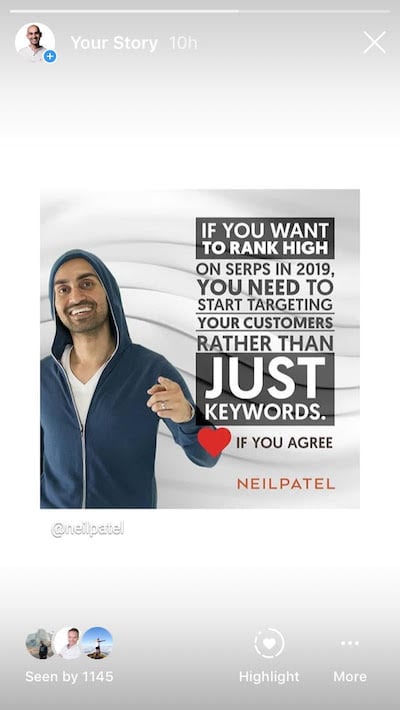
Just look at the stats from the stories I just posted:
story instagram

I can generate over 1,000 views within 8 hours of posting a story and generally in the range of 1,600 to 2,000 views within 24 hours.

The same story 23 hours later received 1870 views.
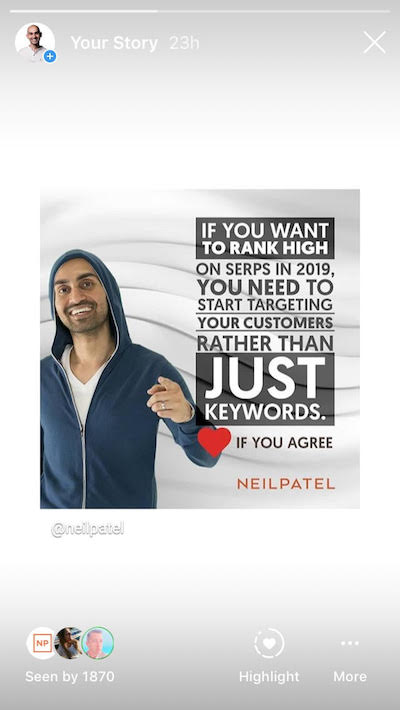
story 23 hours

Here are some things to keep in mind if you want to maximize stories:

  1. Don’t post all of your stories at once, spread them out throughout the day. This will cause people to keep coming back and engaging with your profile.
  2. Use a combination of both images and videos within your stories. Overall, you’ll find that videos create more engagement.
  3. The more stories you publish, the better off you are.
  4. Add polls to your stories, this also helps boost engagement.
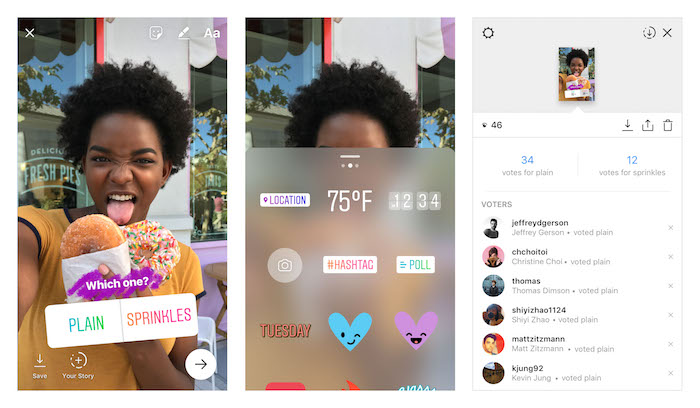
polls

Tip #7: Quality matters

Have you noticed that some images get more likes than others? Or certain videos get more engagement?

Instagram is a visual social network. So the visual part is important… you want your images and videos to look great no matter what.

Now, they don’t have to be perfect, but you do want to make sure you are posting images that people enjoy.

Here’s what I mean…

When you look at my profile, you’ll see a ton of images of me that contain quotes.
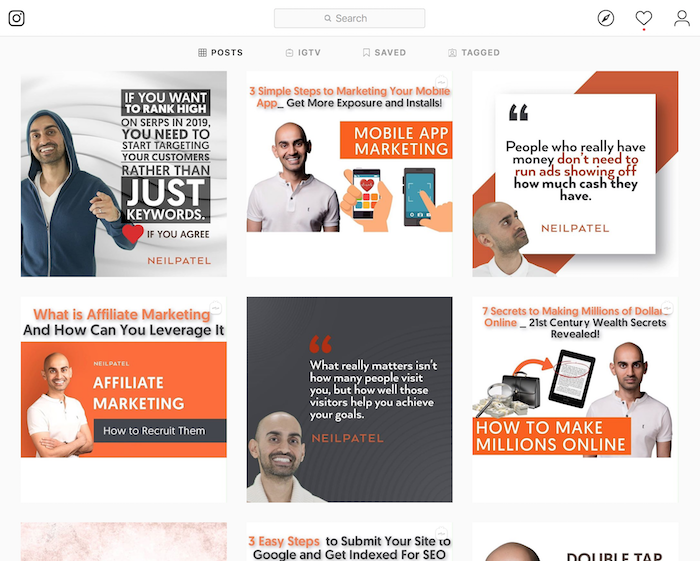
instagram profile

Some of those images perform really well, while others don’t. For example, every time I post a quote using this image template…
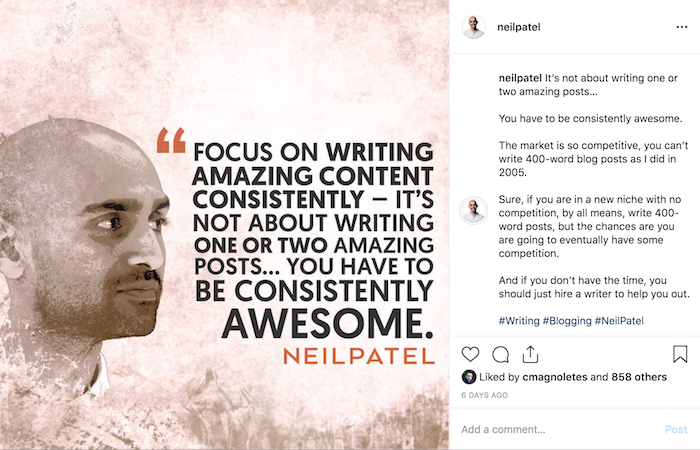
bad template

It gets 21.4% less engagement then when I use this template…

good template

Keep track of what your followers like and don’t like. Post more of what they like and stop posting the stuff that has low engagement.

Tip #8: Test, test, test

Speaking of posting more of what your followers like and less of what they don’t, you need to constantly test.

Even though quality matters, when you are testing you shouldn’t aim for perfection. Just aim for speed.

Once you find something that people like, do more of it.

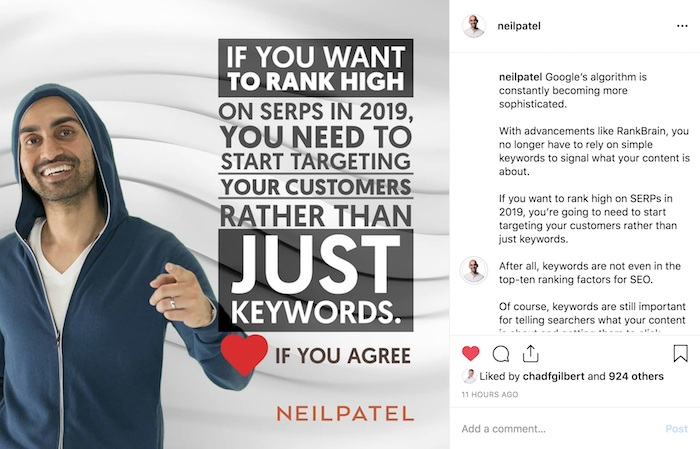
For example, I ask people to double tap as I talked about in tip number 2 because I learned it through testing.
heart tap

Here are some other things I’ve learned through testing:

  • Simplicity is the ultimate sophistication – people prefer clean images that are simple.
  • Use bright colors – images that are darker, such as night photography don’t perform as well.
  • Switch things up – if you do the same thing every week you’ll find your engagement starting to drop.
  • People want to get to know you – they don’t want to get to know the Photoshop version of you. Be realistic and personal. Connect with your followers.
  • Filters don’t matter – don’t waste too much time modifying or adjusting your images. Little things like filters don’t make the biggest difference.
  • Hashtags aren’t game changing – I know everyone says you have to use hashtags and you should here and there… but they aren’t game-changing. So don’t spam and use 20 hashtags per image you post. And when you do use them, pick relevant and popular ones. You can use Ubersuggest to figure out what keywords are popular.
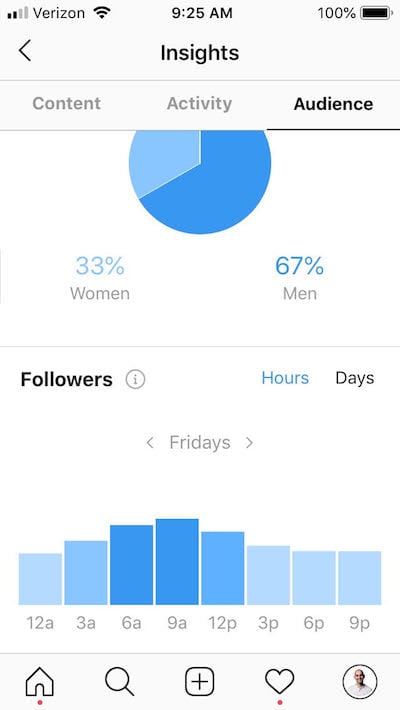
  • Use Instagram analytics – it tells you when your followers are online so you know when to post. If you post when they are online you’ll get much more engagement.

A good example of a test I’ve run is when I post on my feed. As you can see from my stats…
igstats

My followers are most likely to be on Instagram at 9am. So I try to post around that time, which has helped me get 8.41% more likes per image.

Every little bit adds up!

Conclusion

You don’t have to spend money on ads to grow your Instagram following. If you follow the tips above, you’ll do well and find that you can grow your weekly following count by over 1,000 net new followers each week.

Now, I know you may not want to use Instagram because it doesn’t have your “ideal” audience, but you can drive conversions from Instagram.

For example, when I went live on Instagram and I told the audience to check out my ad agency Neil Patel Digital, I was able to generate 2 leads.

Neither of the leads were ideal customers, but it is a numbers game. If I continually do it I will be able to generate clients.

In the past, I have closed 3 deals from Instagram… one paid $120,000, the other paid $1,000,000, and the last paid $300,000.

They were all consulting arrangements, so I had substantial costs associated with the revenue, but it shows that Instagram does work.

Heck, if it didn’t, I wouldn’t be back on Instagram again (this is my 3rd profile, I no longer use the other 2).

You can also use the swipe up feature to drive people to your site and this will help you generate leads and sales.

So, what do you think about Instagram? Are you using it on a daily basis?

The post How I Gain 1,260 Instagram Followers Per Week appeared first on Neil Patel.

The post How I Gain 1,260 Instagram Followers Per Week appeared first on Projabez Media – Digital Marketing Agency.

From https://projabez.com/how-i-gain-1260-instagram-followers-per-week/


from
https://projabezmediadigitalmarketingseoagency.wordpress.com/2019/07/21/how-i-gain-1260-instagram-followers-per-week/

How to Perform a Thorough SEO Audit in Less Than 3 Minutes

seo analyzer

They say there are over 200 ranking factors in Google’s algorithm.

But are you going to take the time to optimize your site for each and every single one of them?

Well, you should… but you probably won’t.

See, SEO has changed… it used to be that you could do a handful of things and rank well. Sadly, those days are gone.

Now you have to do every little thing and do it well to dominate Google.

So, I decided to make your job easier and release yet another new feature in Ubersuggest that audits your website for you in less than 3 minutes.

It’s called SEO Analyzer.

Introducing SEO Analyzer

If you want to find out what’s wrong with your website, you won’t have to do it manually anymore.

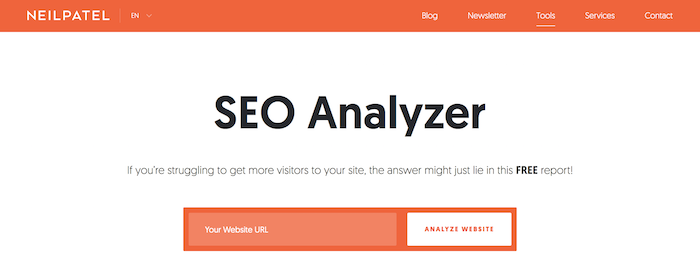
All you have to do is head over to the SEO Analyzer and put in your URL.

seo analyzer

How SEO Analyzer works

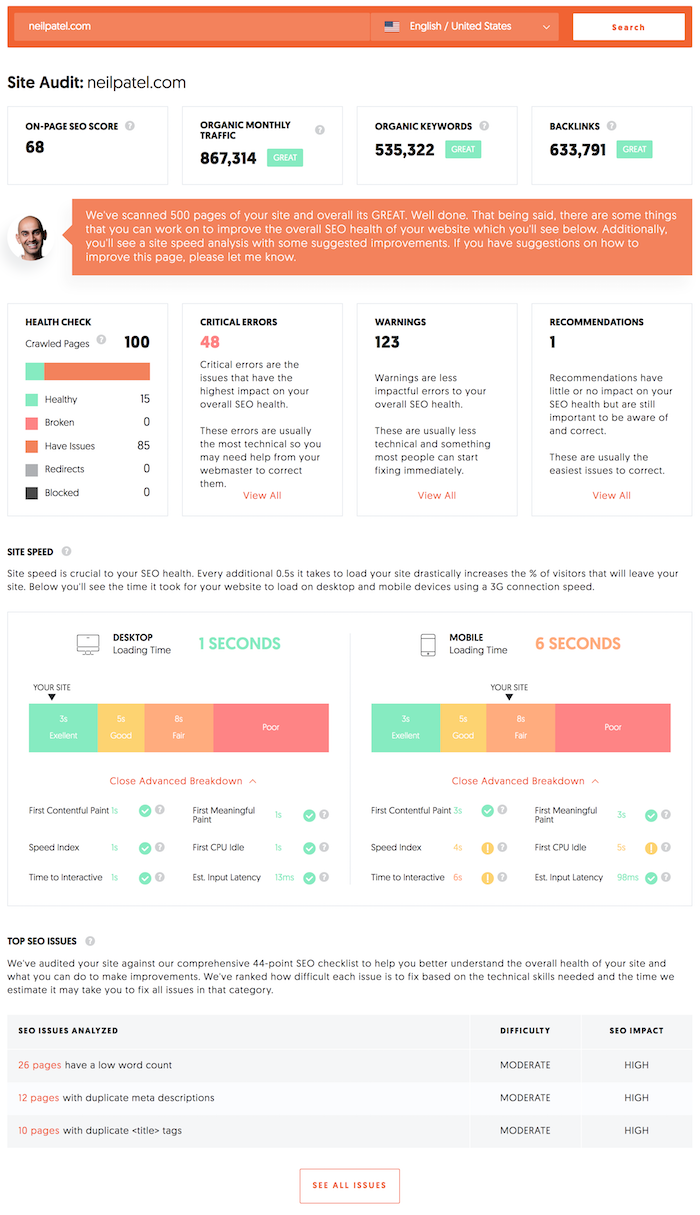
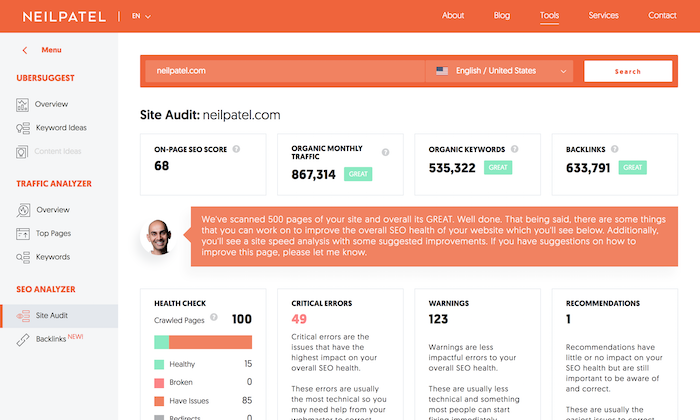
Once you put in your URL, you’ll be taken to a report that looks something like this:

seo analyzer

Once the report loads (it typically takes 3 minutes or less), you’ll see an overview like the image above.

The overview is broken down into 3 main sections.

Overview

overview

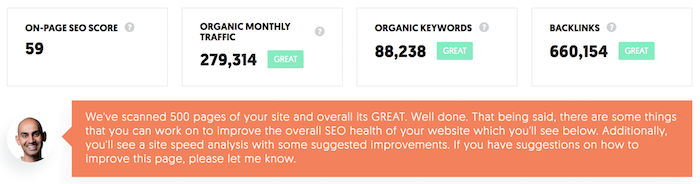
The first section shows you your on-page SEO score (the higher the better), your estimated search traffic, the number of keywords the domain ranks for, and how many backlinks the site has.

You’ll also see a message from me that breaks down how many pages were crawled and any SEO errors that were found.

When you click on any of those 4 boxes, it will take you to a more in-depth report.

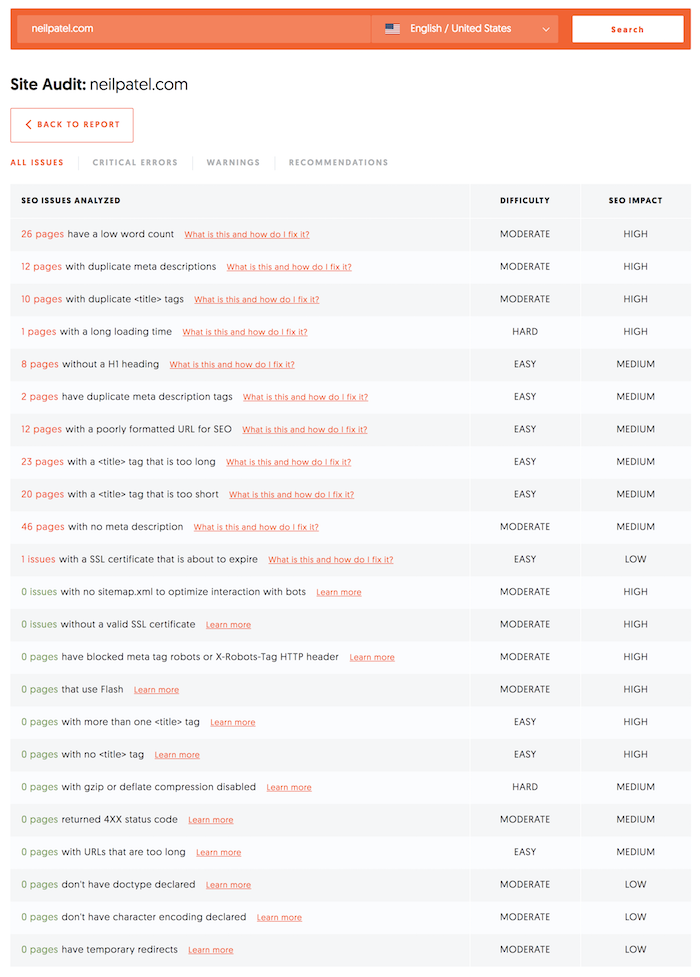
Clicking on the on-page score takes you to a page that lists out your SEO errors. It looks something like this:

seo issues

Clicking on the organic traffic takes you to a report that shows you how well your site is performing.

traffic analyzer

Clicking on the keywords box shows you all of the keywords your website ranks for organically.

keywords

And clicking on the backlinks box shows you all of the sites linking to that domain.

backlinks

Site health

This is my favorite section of the site audit report. This is where you can really dig around and boost your rankings

site health

You can click on any of the four site health boxes and drill down into more reports.

This is important because you’ll want to first focus on clearing up any critical errors. From there, you’ll want to fix any warnings and then, finally, consider doing any of the given recommendations.

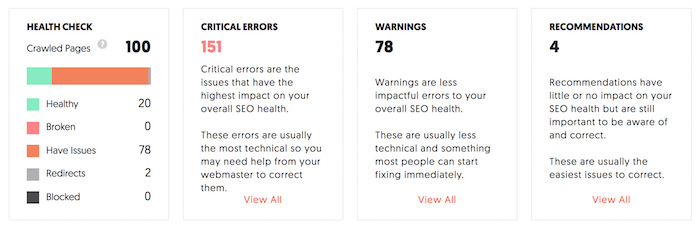
The health check box gives you an overview of the healthy pages and the ones that have issues or are broken or blocked or even redirected. By clicking on this box you’ll get taken to a report that lists all your SEO issues in detail.

seo issues

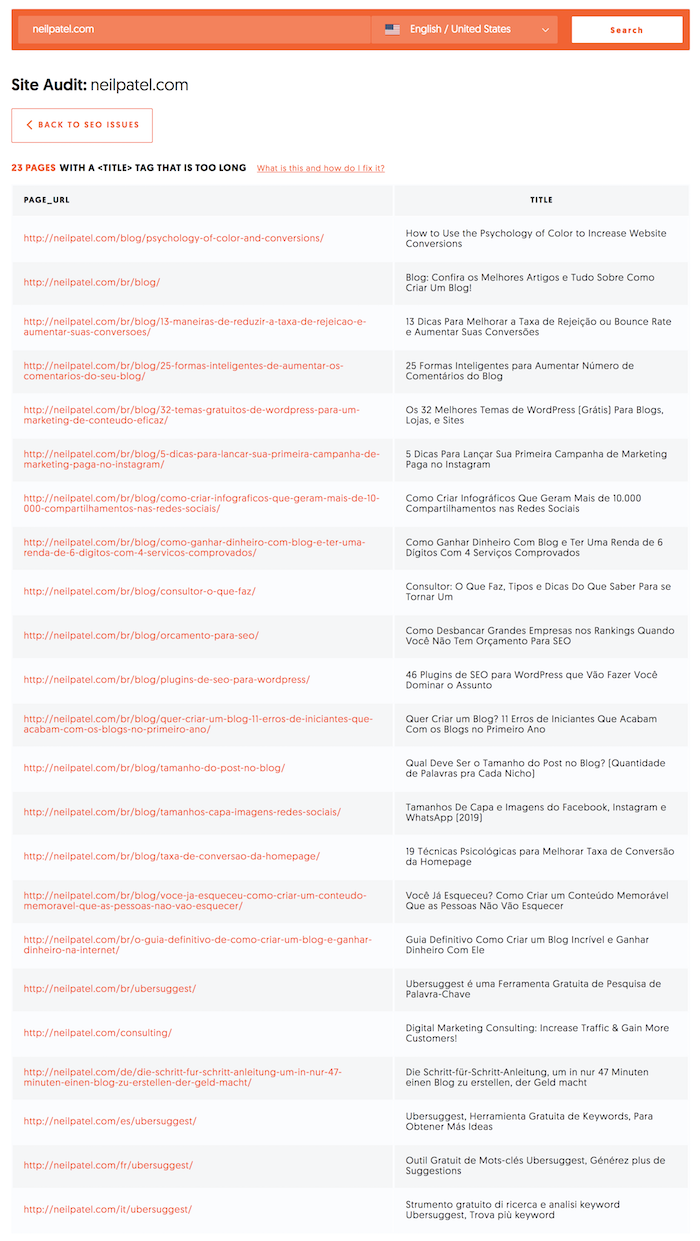
From there you can click on any of those issues and you’ll be taken to the exact pages that contain any SEO errors and what they are exactly. An example of this is pages with too long of a title tag.

long titles

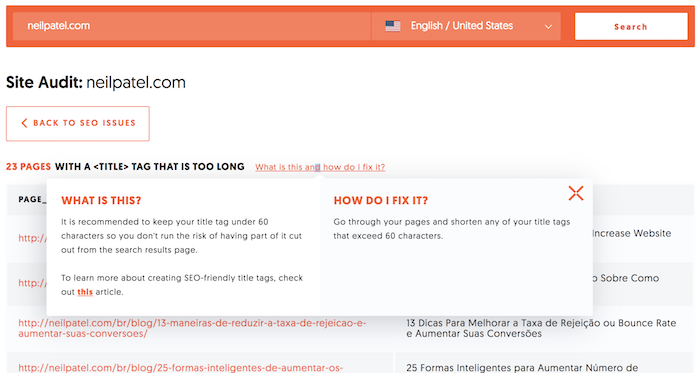
If you aren’t sure on how to fix any of the issues, just click on “what is this and how do I fix it?” and a box like this will appear:

how to fix

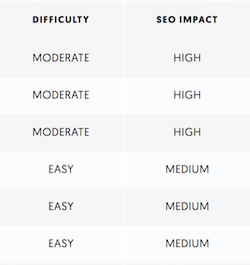
And if you click on the critical errors, warnings or recommendations boxes, you’ll see reports just like the ones above. They will be broken down by how important they are.

hard easy

That way you’ll know which fixes have the greatest SEO impact and how hard they are to implement.

You should first focus on the ones that have the highest SEO impact and are the easiest to implement. And I took the liberty to prioritize the table for you, so all you have to do is start at the top and work your way down to the bottom.

Site speed

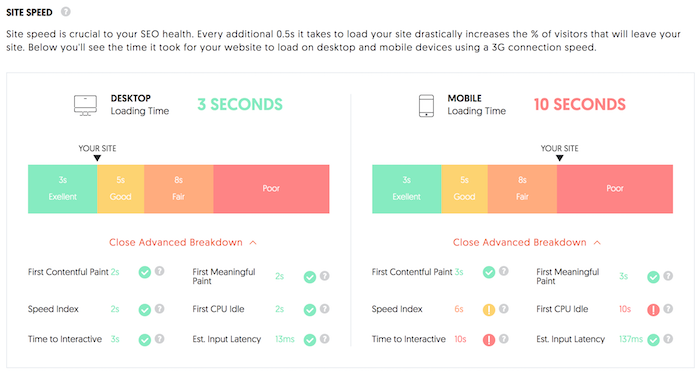
Speed is important. Not only do faster load times help boost conversion rates, but they also help boost your search rankings.

site speed

There are two sections to the site speed. The section on the left breaks down your desktop load time and the section on the right breaks down your mobile load time.

Site speed varies drastically by a person’s connection and computer, but the charts give you a rough range of how fast or slow your site loads.

Your goal should be to have your site load in 3 seconds or less for both mobile and desktop.

The report even breaks down which areas are slowing down your site speed.

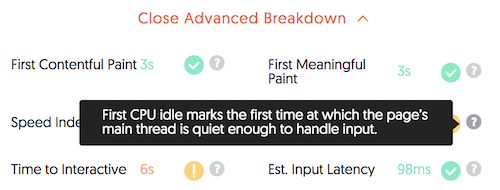
For example, you could have an issue with “First CPU Idle”… and if you aren’t sure what that means, just hover over the question mark and the tool will tell you.

tool tip

Top SEO Issues

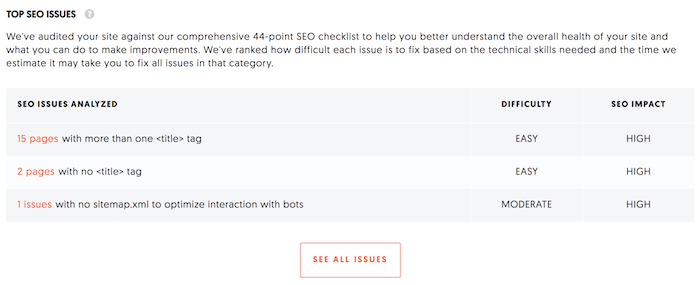
I know I said the report has 3 main sections, but the 4th section is just repeating the site health section.

top seo issues

You’ll see the 3 most important fixes that you should make to your site if you want higher rankings.

If you don’t have the time to fix everything, start off by fixing the 3 issues listed here. Those will give you the biggest bang for your buck.

Conclusion

So, what do you think about the SEO Analyzer report? Do you think it was a good addition to Ubersuggest?

I know I haven’t talked about the SEO Analyzer report much, but we’ve been working on it for 4 months now.

For now, the tool crawls the first 100 pages on your website, and eventually, our goal is to increase the limit to 500 or even 1,000. Technically we can do that fairly easily, but for the launch, I’ve capped it at 100 due to the sheer number of users I have and server load.

Give the SEO Analyzer a try and let me know what you think.

The post How to Perform a Thorough SEO Audit in Less Than 3 Minutes appeared first on Neil Patel.

The post How to Perform a Thorough SEO Audit in Less Than 3 Minutes appeared first on Projabez Media – Digital Marketing Agency.

From https://projabez.com/how-to-perform-a-thorough-seo-audit-in-less-than-3-minutes/


from
https://projabezmediadigitalmarketingseoagency.wordpress.com/2019/07/21/how-to-perform-a-thorough-seo-audit-in-less-than-3-minutes/

How to Rank New Content Faster

domain score

If I write a blog post on any topic, what do you think happens?

It typically gets indexed by Google the same day I publish the content and within a week it tends to rank high on Google.

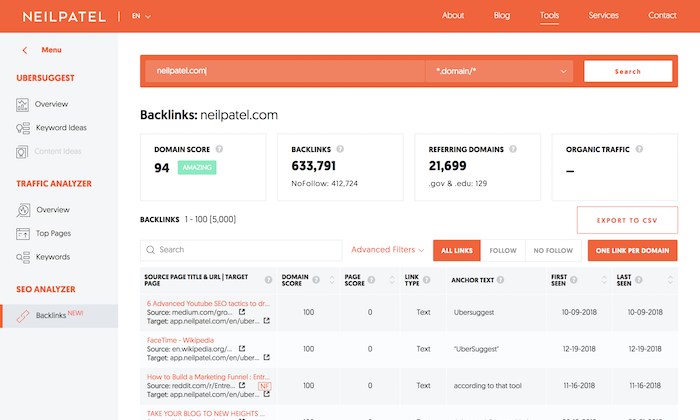
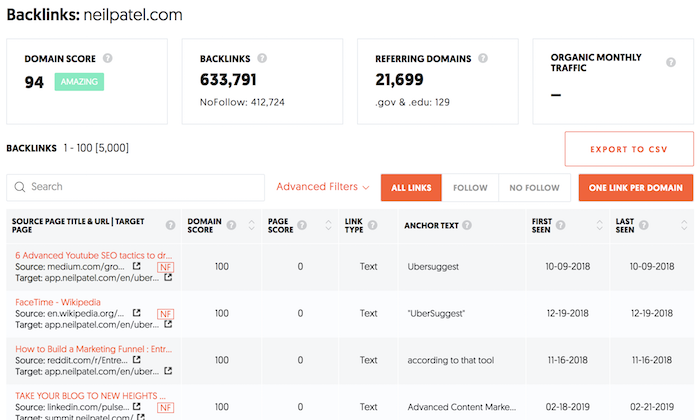
Then again, I have a domain score of 94 and I have 633,791 backlinks. Just look at the image above. (If you are curious what your link count or domain score is, put in your URL here.)

But if you have a lot fewer backlinks and a much lower domain score, what do you think would happen?

Chances are your content won’t get indexed fast and it won’t rank as high as you want.

But there has to be a way to change this, right? Especially without building more backlinks because we all know that’s time-consuming and hard.

To find the most ideal solution, I decided to run a little experiment.

Around five months ago, I sent out an email to a portion of my mailing list asking people if they wanted to partake in an SEO experiment.

As you could imagine, I had well over a thousand websites who were willing to participate. I had to narrow down the list because for this experiment to be effective, a website had to have a domain score of 30 or less and no more than 40 backlinks.

That way it’s at least a challenge to figure out how to rank new content higher.

In addition to that, the site couldn’t be a subdomain, such as domain.wordpress.com. It had to be a standalone site.

Once I removed all of the outliers, I was left with 983 people who agreed to participate in the experiment. Of those, 347 stopped replying or backed out of the experiment due to time commitments, which means I was left with 636.

How did the SEO experiment work?

For all of the sites, we had them write a piece of content. We didn’t make it a requirement that the content had to be about any specific topic or that it had to be written a certain way… we just had them write one piece of content that was between 1,800 and 2,000 words in length.

We enforced the minimum and maximum length limit because we needed the post to be long enough to naturally include keywords, but if it was too long… such as 10,000 words, it would have a higher chance to rank on Google.

Each site had 30 days to write the piece of content and publish it on their site. Within 30 days of the content being published, we looked up the URL in our Ubersuggest database to see how many keywords the post ranks for in the top 100, top 50, and top 10 spots.

We also repeated this search 60 days after the article was published to see if there were any major differences.

The Ubersuggest database currently contains information on 1,459,103,429 keywords from around the world in all languages (a lot of keywords have low search volume like 10 searches per month). But for this experiment, we focused on English speaking sites.

We then split the sites up into 9 groups. Roughly 70 sites per group. Each group only leveraged 1 tactic to see if it helped with rankings.

Here’s a breakdown of each group.

  1. Control group – this group just published the article and didn’t leverage any promotional or SEO tactics. Having a control group allows us to compare how specific tactics affect rankings.
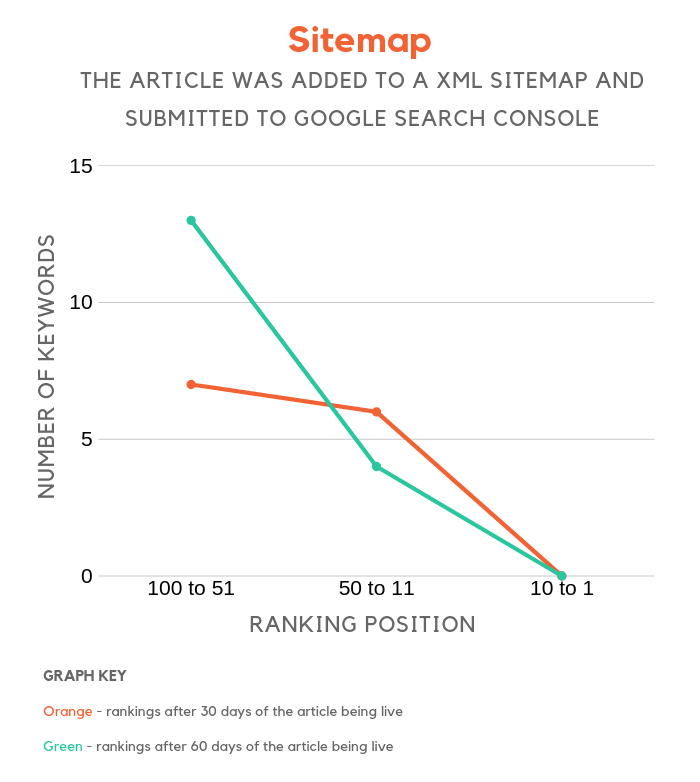
  2. Sitemap – all this group leveraged was a sitemap. They added the article to their sitemap, and we made sure the sitemap was submitted to Google Search Console.
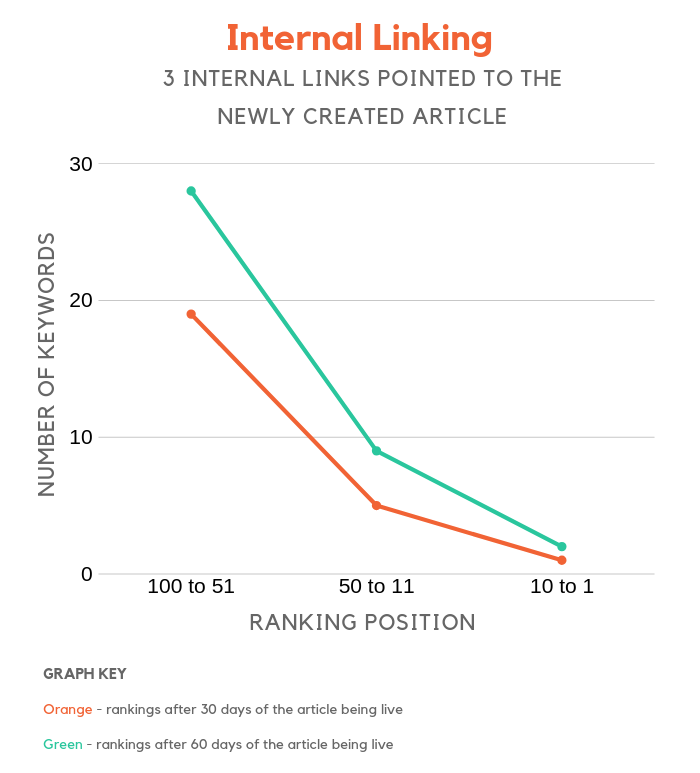
  3. Internal linking – this group added 3 internal links from older pieces of content to the newly written article.
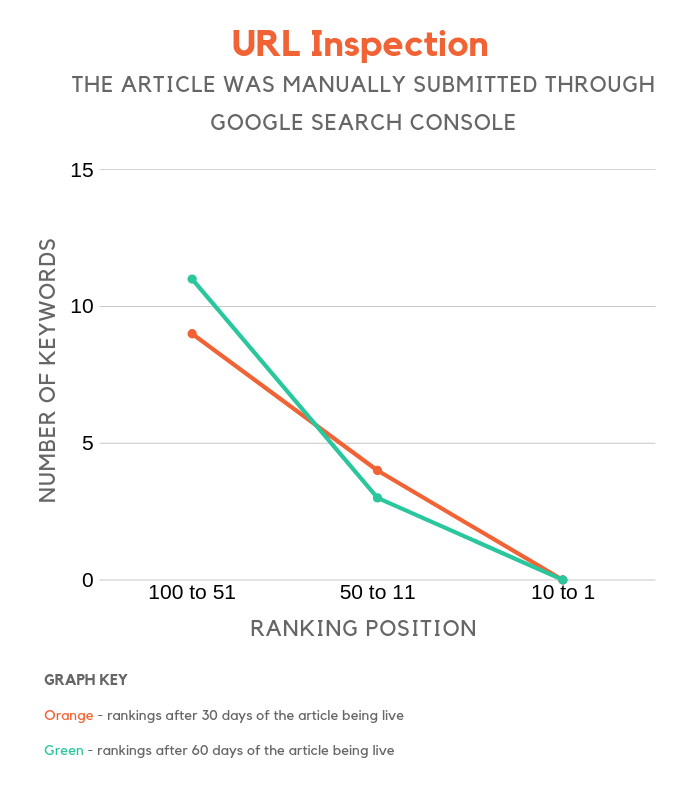
  4. URL Inspection – within Google Search Console you can request that they Crawl and index a URL. That feature is called URL Inspection.
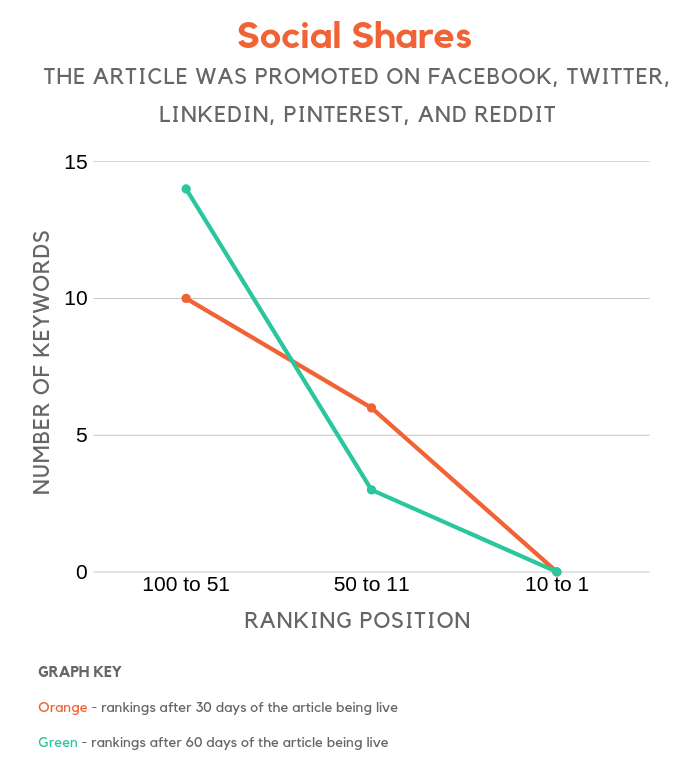
  5. Social shares – Facebook, Twitter, LinkedIn, Pinterest and Reddit were the social sites that this group submitted and promoted their content on.
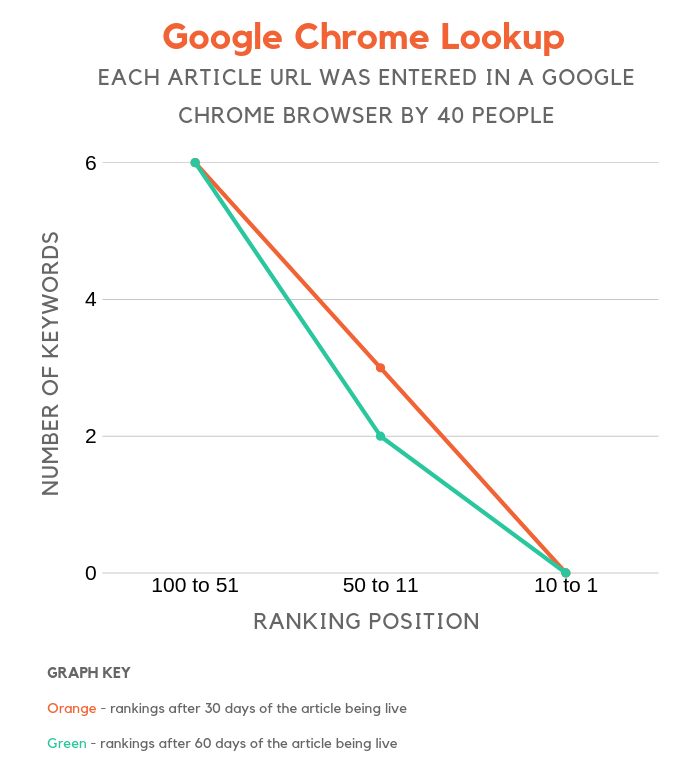
  6. Google Chrome lookup – for each site in this group, we had 40 people type in the URL directly into their address bar and look up the site. This could have been done on either mobile or desktop versions of Chrome. I added this group in there because I was curious to see if people visiting your site from Chrome browsers affects your rankings.
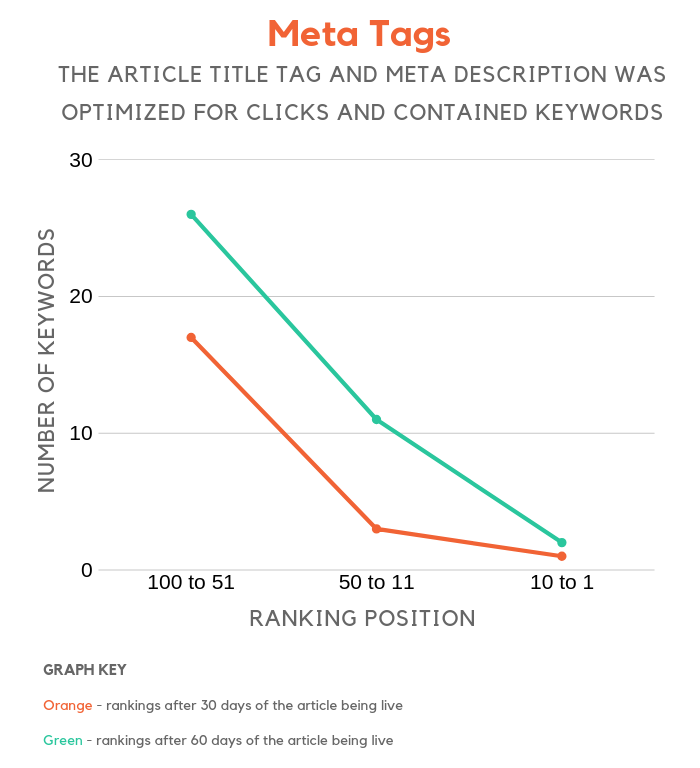
  7. Meta tags – my team optimized the title tag and meta description for everyone in this group. Based on the article, we crafted the optimal meta tags to not only include keywords but also to entice clicks.
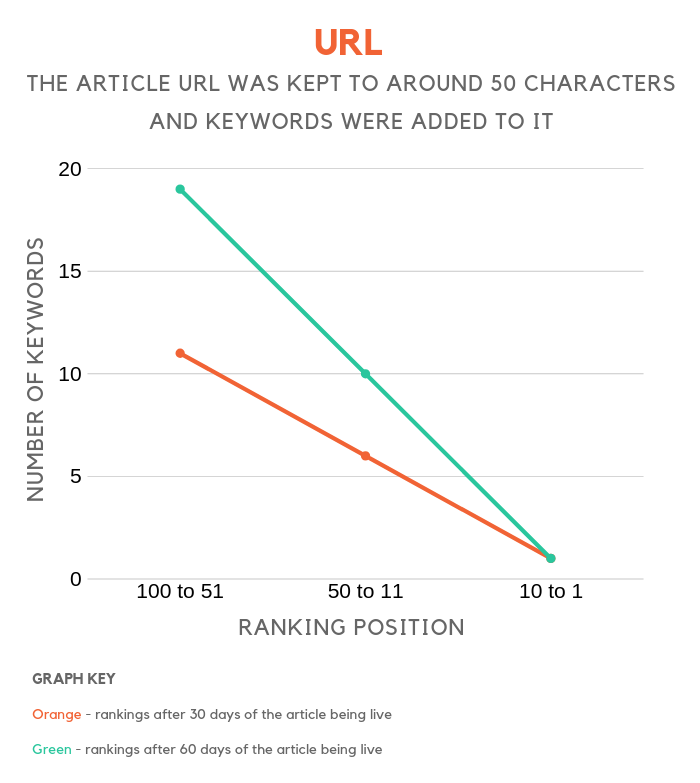
  8. URL – with this group we only optimized their article URL to include keywords and we tried to keep the length around 50 characters as that is what they supposedly prefer.
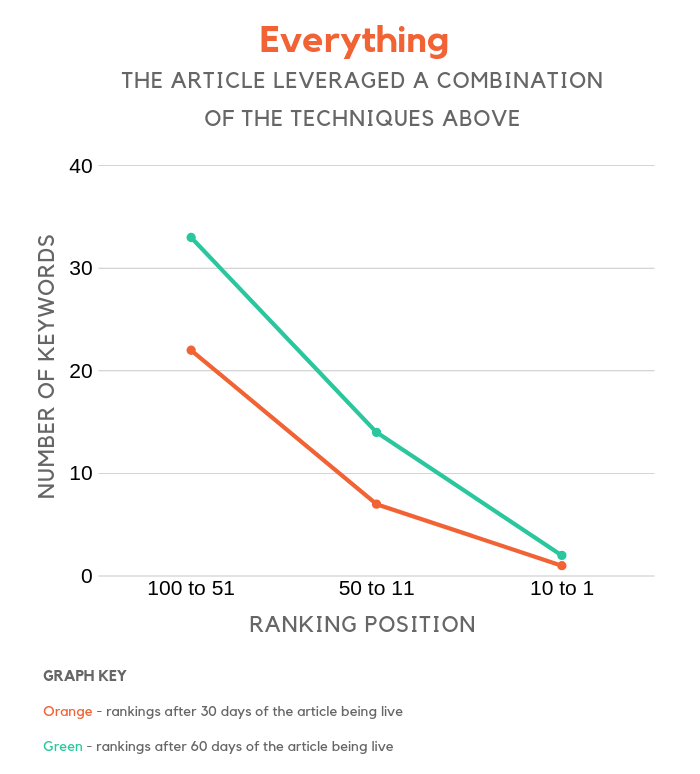
  9. Everything – this group combined all of the tactics above other than the control group as they didn’t do anything.

Before I dive into the data, keep in mind that if someone was in one of the groups, we did our best to make sure that they weren’t leveraging any other tactic. For example, for everyone who wasn’t in the sitemap group, we had them remove their existing sitemaps for Google Search Console (other than the everything group).

Control group

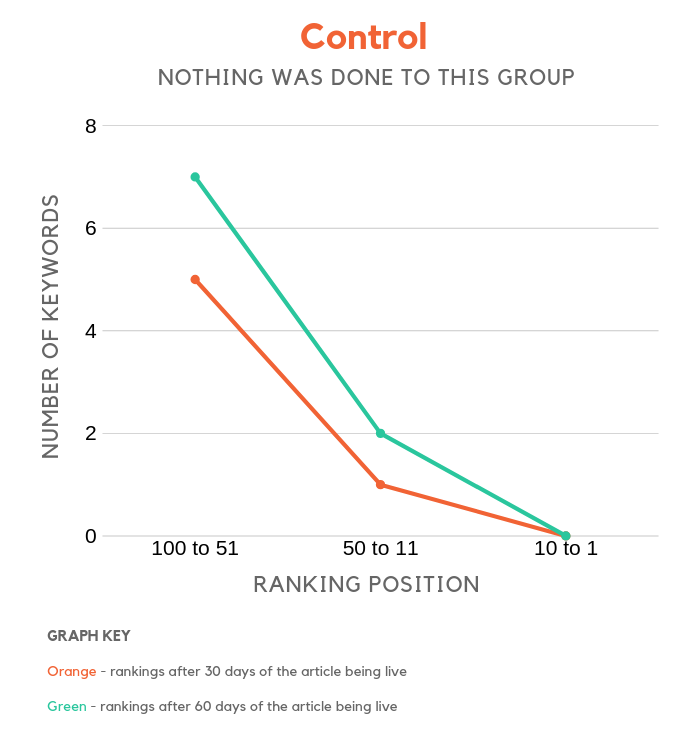
So how many keywords does an average website with a domain score of 30 or less rank for in Google within a month and even two months?

control

I was shocked at how many keywords a site could rank for when it barely has any links and a low domain score.

But what wasn’t as shocking is how a web page’s ranking can increase over time. The orange line shows the number of keywords that ranked within the first 30 days and the green line shows the number over the first 60 days.

Sitemap group

You know how people say you need an XML sitemap, well it is even more important if you have a low domain score. At least, that is what the data shows.

sitemap

When your site has very few links and a low domain score, you’ll find that Google may not crawl your site as often as you want. But by leveraging a sitemap, you can speed up the indexing process, which helps decrease the time it takes for your site to start ranking for keywords.

Internal linking group

Links, links, and more links… it’s what every site needs to rank well. Ideally, those links would be from external sites, but that’s hard to do. So, we tested how internal links impact rankings.

When you add internal links from your old content to your newer articles, it helps them get indexed faster and it helps push them up in the rankings.

Especially when these internal links come from relevant pages that have some decent rankings on Google.

internal links

Articles that leveraged 3 internal links had more page 1 rankings than sites that just used an XML sitemap.

URL inspection group

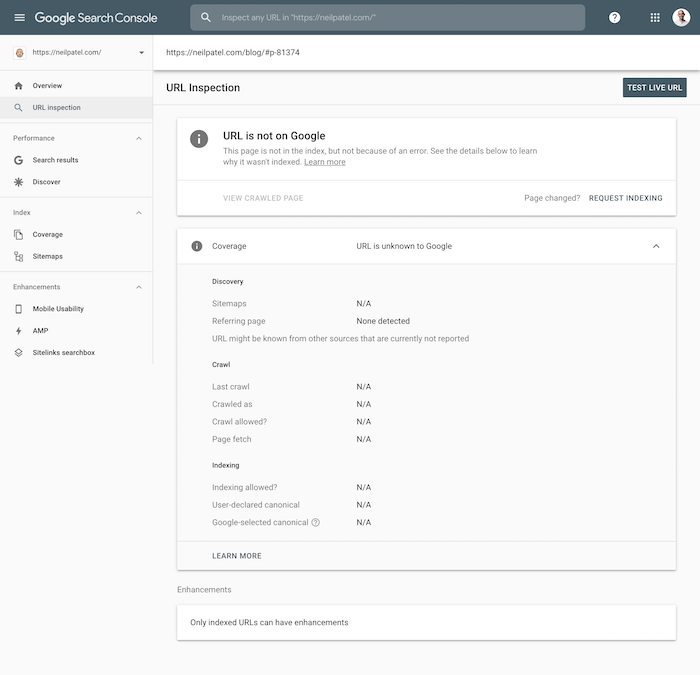
If you aren’t familiar with the URL inspection feature within Google Search Console, it’s a quick way to getting your content index.

Just log into Search Console and type in your article URL in the search bar at the top. You’ll see a screen that looks something like this:

url inspection

All you have to do is click the “request indexing” link.

url inspection

Leveraging this feature has a similar result to using the sitemap.

Social shares group

I’ve noticed a trend with my own website, in which if I create a piece of content that goes viral on the social web, my rankings for that new piece of content skyrocket to the top of Google… at least in the very short run.

And after a few weeks, I notice that my rankings drop.

Now, my site isn’t a large enough sample size and there are many reasons why my site ranks really well quickly.

Nonetheless, it was interesting to see how much social shares impact rankings.

social shares

Getting social shares substantially performed better than the control group, but similar to my experience with NeilPatel.com, the rankings did slip a bit in month 2 instead of continually rising to the top.

Social shares may not have a direct impact on rankings, but the more people who see your content the higher the chance you build backlinks, increase your brand queries, and build brand loyalty.

Google Chrome lookup group

Do you know how people are saying that Google is using data from Google Analytics and Chrome to determine how high your site should rank?

Well, I wasn’t able to prove that from this experiment.

I had 40 random people directly type in the URL of each new article into Google Chrome. I spread it out over a week, making sure they clicked around on the site and stayed for at least 2 minutes.

google chrome

The ranking results were very similar to the control group.

Meta tags group

Now this group performed very similarly to the group that leveraged internal linking. And the month 2 results outperformed all other groups.

meta tags

User metrics are a key part of Google’s algorithm. If you can create a compelling title tag and meta description, you’ll see a boost in your click-through rate and eventually, your rankings will climb.

If you want to boost your rankings through your meta tags, it’s not just about adding in the right keywords, you’ll also want to boost your click-through rate. Follow these steps to do just that.

URL group

The 8th group tested if URL length impacts how high a new piece of content ranks on Google.

url

Based on the graph above, you can see that it does. It didn’t have as much of an impact as internal linking or meta tags, but it did have an impact.

The key to creating SEO friendly URLs is to include a keyword or two and keep them short.

If your URL is too long and descriptive, such as:

neilpatel.com/blog/how-to-optimize-your-meta-tags-for-search-engines

The article will rank for very long tail phrases but will struggle to rank for more popular terms like “meta tags” compared to URLs like:

neilpatel.com/blog/meta-tags/

The beautiful part about the short URLs is that they rank well for head terms and long tail phrases.

Conclusion

The charts clearly show that little things like meta tags, URLs, internal linking, social shares, and even sitemaps help.

But the key to doing well, especially if you want your new content to rank well is to not just do one of those things, but instead do them all.

everything

As you can see from the chart, doing everything gives you the best results. Now sure, some of the things are redundant like using an XML sitemap and using the URL inspection feature, but you get the point.

You’ll also notice that when you leverage everything together your results aren’t exponentially better… SEO is competitive and has turned into a game where every little thing adds up.

If you want to do well and have your new AND old content rank faster and higher, you need to do everything.

I know the tactics above aren’t anything revolutionary or new, but it’s interesting to look at the data and see how specific tactics affect rankings.

So, what do you think?

The post How to Rank New Content Faster appeared first on Neil Patel.

The post How to Rank New Content Faster appeared first on Projabez Media – Digital Marketing Agency.

From https://projabez.com/how-to-rank-new-content-faster/


from
https://projabezmediadigitalmarketingseoagency.wordpress.com/2019/07/21/how-to-rank-new-content-faster/

Friday, July 19, 2019

Ubersuggest 4.0: The Ultimate Content Marketing Tool

content ideas

Why do you do keyword research?

It’s to find more lucrative keywords to rank for on Google, right?

But once you find these keywords, you still have to figure out how to rank for them.

For that reason, I decided to update Ubersuggest because I wanted to show you what kind of content to create and even how to promote it.

That way you can start ranking for these newly found keywords.

Here’s what’s new…

Content ideas

The way you rank for a keyword is by creating content around it. I know content isn’t king anymore and that’s because there are over 1 billion blogs on the web. That means Google can be really picky about what they decide to rank.

So now, not only do you need to write amazing content, but you also have to promote it if you want to do well.

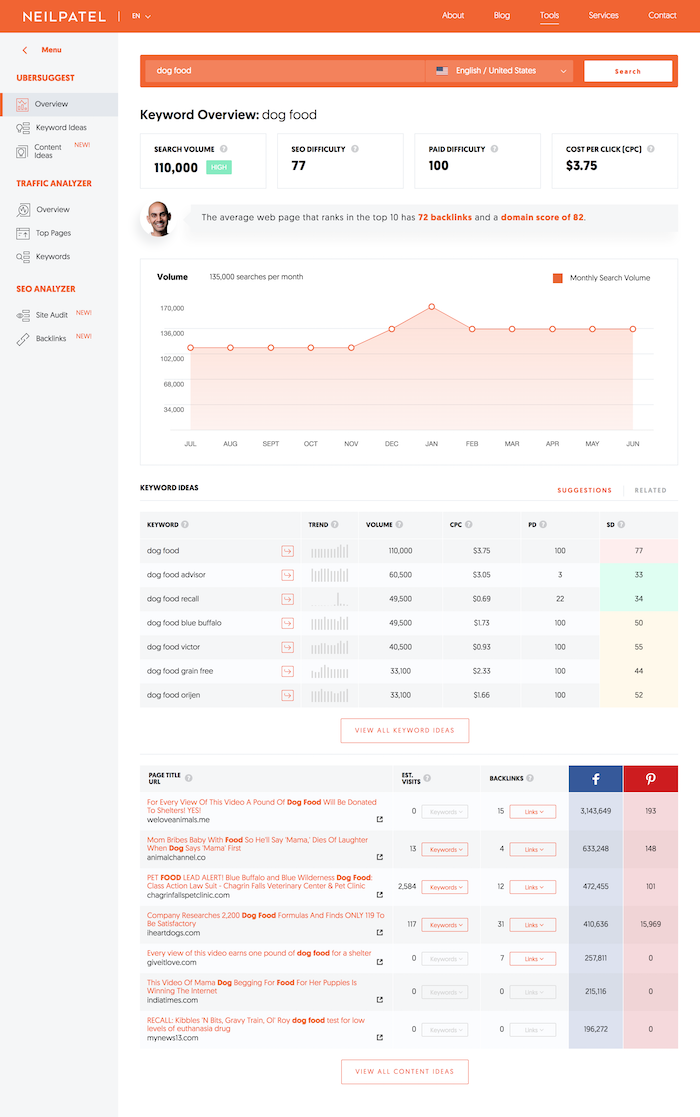
To help you with this I created a Content Ideas report in Ubersuggest. So whenever you do keyword research, you’ll see an overview that looks like this:

overview

Just like before, you’ll see a graph at the top with the search volume over time, some keyword recommendations and, at the very bottom, a list of blog posts that performed exceptionally well for that keyword.

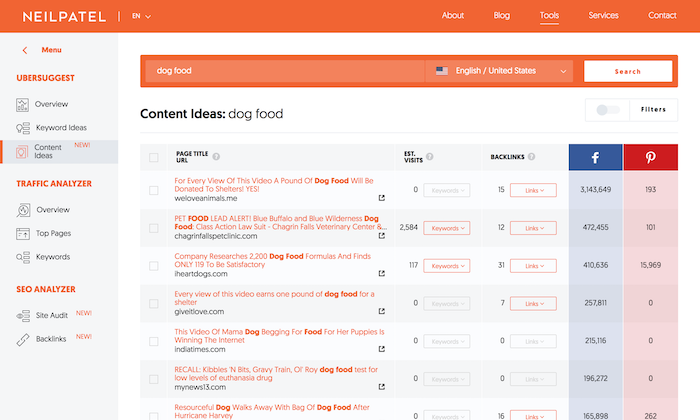
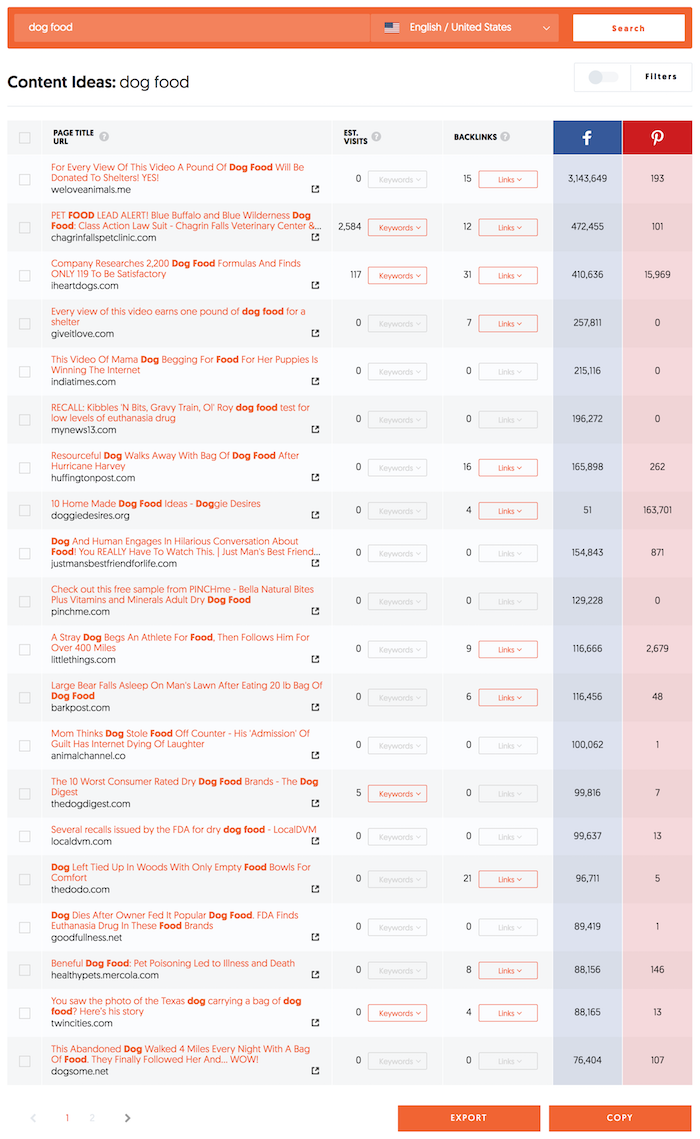
When you click on “content ideas” in the navigational menu or you click on “view all content ideas,” you’ll then be taken to a page that looks something like this:

content ideas

This page shows you all of the popular blog posts that have been written related to the keyword or phrase you searched.

The list is ordered by social shares, so the posts with the highest social shares are at the top. At the bottom, you can keep clicking to see more results. Even if your screen only shows 1 or 2 pages, just keep clicking next and you’ll start to see results for pages 3, 4, 5, etc.

We only show you 20 results per page, but each key phrase will typically have hundreds, if not thousands, of results as our database has over 500,000,000 blog posts from around the world.

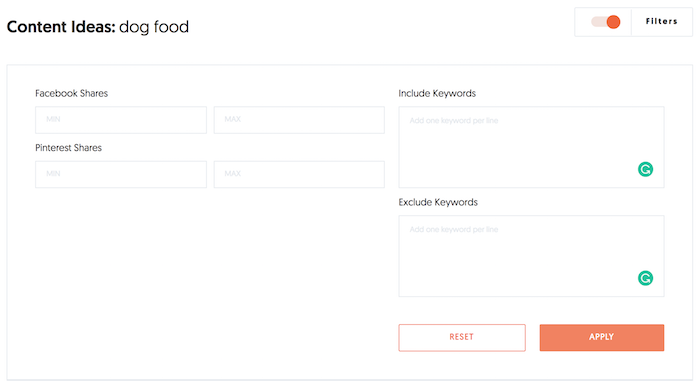
And because there are so many results, we’ve also created an easy to use filtering system so you can fine-tune your search by including certain keywords or excluding other ones and even putting minimum and maximum thresholds on social shares.

filters

My favorite part about the content ideas report

I know you can do similar things with Buzzsumo and other tools, but this is why I created the Content Ideas report.

As I mentioned earlier, content isn’t king. You not only have to write amazing content (that’s why I sort the content by social shares as more shares typically mean people love it), but you also have to promote it.

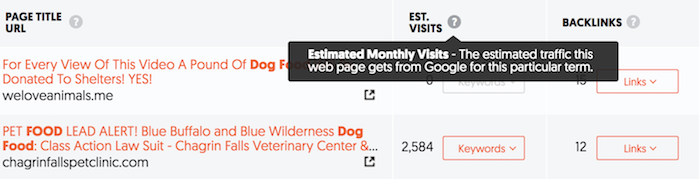
You’ll notice that there are two other columns in this report that make the tool unique… one is “Estimated Visits” and the other is “Backlinks”.

headings

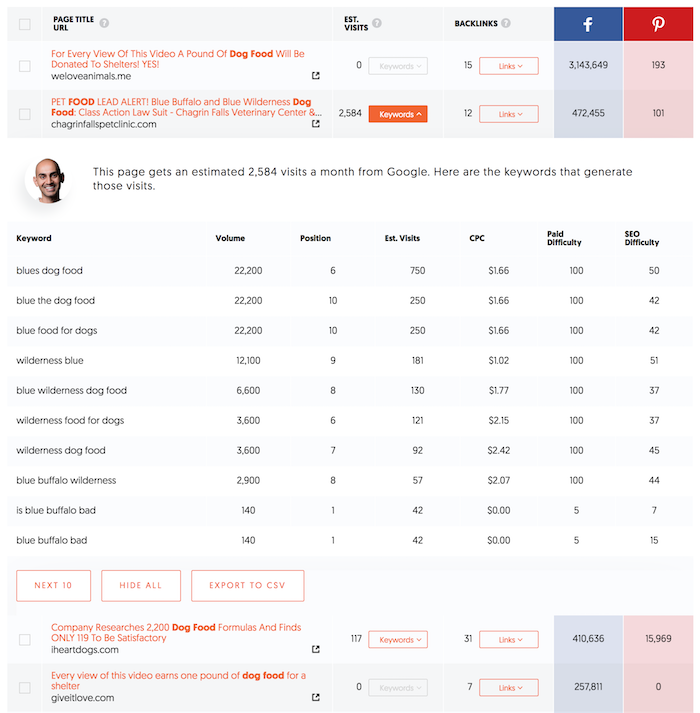
Estimated visits will show you how many visits the blog post generated from Google each month. Just click on “Keywords” and it will even show you the keywords that drive those visits and the position the article ranks for each of those terms.

keywords

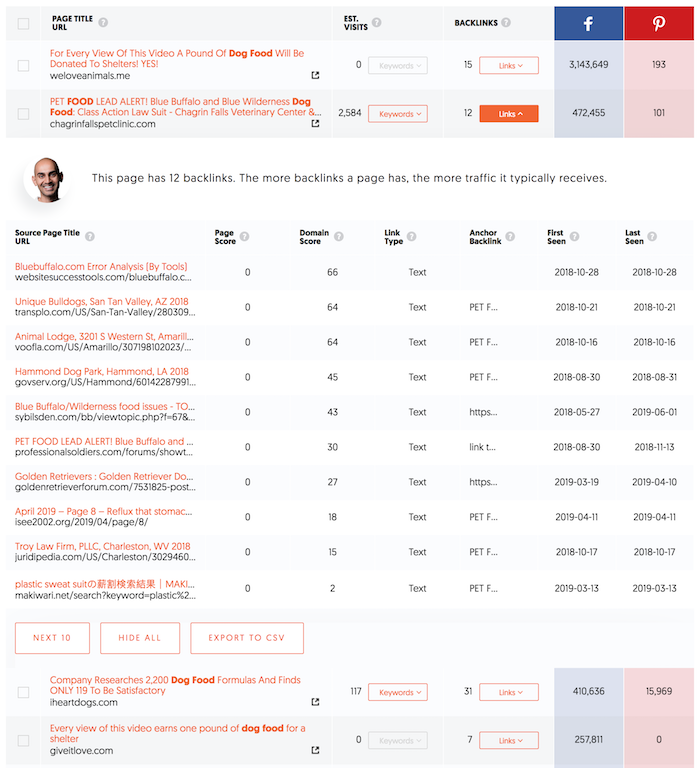
Backlinks, on the other hand, are all of the referring domains that point to each article. So if 12 unique domains link to that blog post, then you’ll see the number “12” in that column. All you have to do is click on “links” and you’ll see the full list of backlinks.

links

Not only do I provide a thorough list of backlinks, but I also show you the overall page score, domain score, anchor text, and even the type of link.

The reasons I made the Content Ideas report like this are:

  1. By creating content similar to posts that have a lot of social shares, it increases the chances that the content you are writing is going to do well as people have already shown interest in that topic and even shared it on the social web.
  2. By showing you the keywords a blog post ranks for, you’ll know what keywords to focus on when writing the content. This way your post can rank as well.
  3. By showing you who links to your competition, you can now hit up everyone who links to competing articles and ask them to link to your piece of content.

Less fluff and more data

In addition to the Content Ideas report, you’ll now find that Ubersuggest provides you with more data and less fluff when you perform a keyword query.

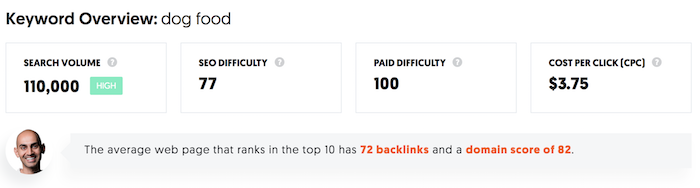
For example, if you search for the term “dog food,” it will tell you that the average result that ranks in the top 10 has 72 backlinks and a domain score of 82.

speech bubble

This way, if you want to rank for that term or any other term, you’ll have a rough idea of what you need from an authority and backlink standpoint to achieve a spot on page one.

Conclusion

If you are going to create content or write a blog post, you should check out the Content Ideas report each time before you write.

The last thing you want to do is create content that people don’t care about reading. And this report will give you good feedback so that way you aren’t wasting your time creating content that doesn’t generate social shares, backlinks, or rankings.

You’ll also notice that some posts do extremely well from a social sharing standpoint but terrible from a backlink and a search traffic perspective.

Social shares will bring you more short-term traffic and search engines bring you less traffic upfront, but more consistent traffic over time.

This report will help you find a balance so that you can get both short-term traffic and consistent traffic over the long-haul.

So, head on over and try the new Content Ideas report.

What do you think about the content ideas report?

The post Ubersuggest 4.0: The Ultimate Content Marketing Tool appeared first on Neil Patel.

The post Ubersuggest 4.0: The Ultimate Content Marketing Tool appeared first on Projabez Media – Digital Marketing Agency.

from
https://projabez.com/ubersuggest-4-0-the-ultimate-content-marketing-tool/

From http://projabezmediadigitalmarketing.blogspot.com/2019/07/ubersuggest-40-ultimate-content.html


from
https://projabezmediadigitalmarketingseoagency.wordpress.com/2019/07/20/ubersuggest-4-0-the-ultimate-content-marketing-tool-2/